


What is AI?
Learn what Explanation of AI is in simple terms, Artificial Intelligence, commonly known as AI, refers to the simulation of human intelligence in machines. These machines are designed to think and learn like humans, emulating cognitive functions such as perception, reasoning, and problem-solving. The term encompasses a variety of technologies and approaches, aiming to create systems capable of performing tasks that typically require human intelligence.
Artificial Intelligence (AI) is one of the most transformative technologies of the 21st century. From voice assistants like Siri and Alexa to self-driving car
In this blog, we’ll break down Explanation of AI in terms of :
- AI in simple terms,
- Explore its types
- Applications
- Discuss the potential benefits
- Challenges it brings.
How Does AI Work?
AI operates through algorithms and data processing techniques. Machine learning, a subset of AI, enables systems to learn from data and improve over time without explicit programming. This process involves feeding large amounts of data into AI systems, allowing them to recognize patterns and make decisions based on the information. Natural language processing, computer vision, and robotics are other areas where AI technology is applied, showcasing the diverse functionalities of intelligent systems.
The Impact of AI on Society
AI has significant implications for various sectors, including healthcare, finance, and transportation. In healthcare, AI explained plays a crucial role in diagnostics and personalized medicine, improving patient outcomes. In the finance sector, algorithms handle data analysis and risk assessment, enhancing decision-making processes. Furthermore, the automotive industry is witnessing the rise of self-driving vehicles, all thanks to the advancements in AI technology.
The ongoing development of AI presents both opportunities and challenges. As we continue to explore the potential of AI, it is essential to address ethical considerations and ensure that these technologies benefit society as a whole.
IS AI REALLY AI
Yes, it is AI in the sense that machines perform tasks that require some level of intelligence if done by humans (like playing chess or understanding speech).
No, it is not AI in the sense of human-like thinking, consciousness, or creativity.
Most AI systems today are what we call Narrow AI. They are designed to perform specific tasks—like recognizing faces, translating languages, or recommending products. They don’t understand or think like humans; they follow patterns and rules learned from data. So, while they seem “smart,” they don’t possess consciousness, emotions, or true understanding.
AI made simple for beginners:
Artificial Intelligence, or AI, is a way to make computers and machines smart so they can think, learn, and make decisions like humans do. Instead of just following strict instructions, AI systems analyze lots of data to find patterns and improve over time. For example, when you talk to voice assistants like Siri or Alexa, AI helps them understand your words and respond correctly. AI is also behind recommendations on different platforms.. Most AI today is good at specific tasks, like recognizing images or driving cars, but scientists are working toward creating AI that can think more broadly like a person. Understanding AI is important because it’s becoming part of everyday life, helping in fields like healthcare, education, and transportation, and it will continue to shape the future in many exciting ways.
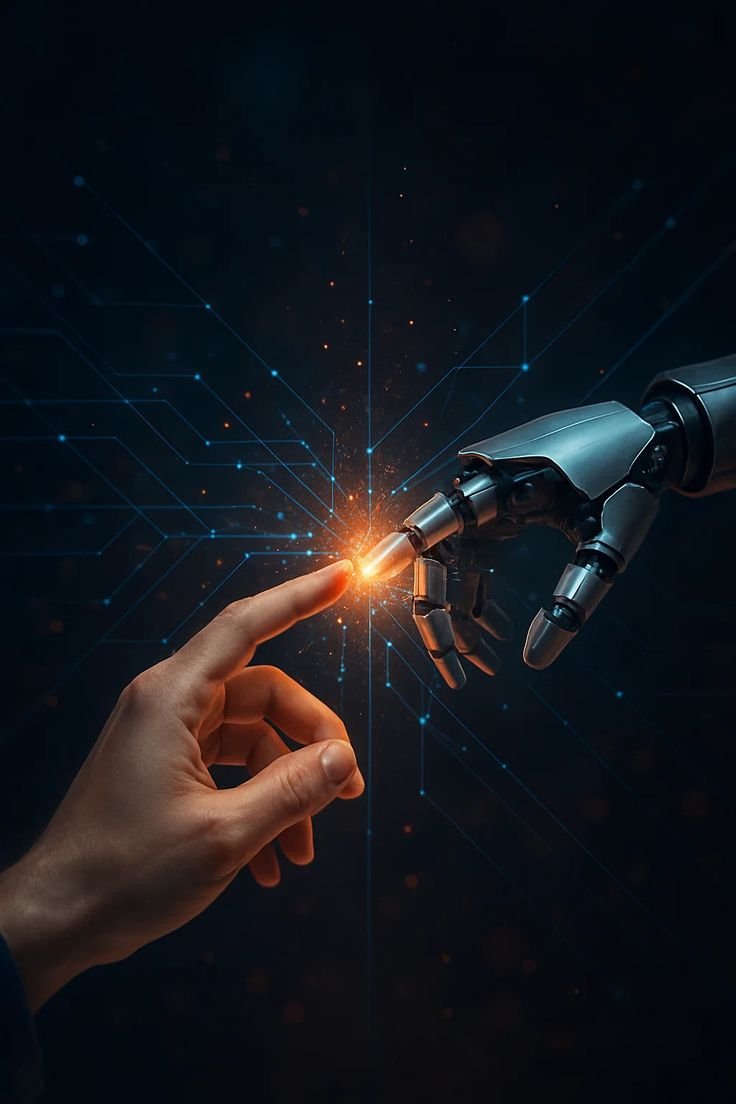
Methods and goals in AI
Symbolic vs. connectionist approaches
Goals of AI
AI aims to create machines that can think, learn, solve problems, and make decisions much like humans do. The goal is to build systems that can understand human language, recognize images, plan what to do next, and adapt to new situations on their own. Ultimately, AI helps us improve automation, boost productivity, and make smarter decisions in everyday life.
Methods in AI
AI works by using different algorithms and models that allow machines to process data, spot patterns, and perform tasks that require intelligence. These methods range from rule-based systems, where everything follows clear logic and instructions, to learning-based systems like neural networks, which learn from examples and experience.
Symbolic vs. Connectionist Approaches
| Aspect | Symbolic AI (Old-School AI) | Connectionist AI (Neural Networks) |
|---|---|---|
| What it is | Uses symbols, rules, and logic to represent knowledge and reasoning. | Mimics the brain by using networks of artificial neurons that learn from data. |
| How it works | Follows explicitly programmed rules and logical steps. | Learns by adjusting connections based on patterns in data. |
| Strengths | Great for clear, step-by-step reasoning and easy to understand decisions. | Amazing at spotting patterns, recognizing images, and understanding speech. |
| Weaknesses | Can’t handle messy or uncertain information well; tends to be rigid. | Often works like a “black box” — hard to explain exactly how it makes decisions. |
| Examples | Expert systems, rule-based programs. | Deep learning, image recognition, voice assistants. |
AI Technologies :
Machine Learning (ML) — Algorithms that learn from data without being explicitly programmed.
Deep Learning — A type of ML using neural networks with many layers to learn complex patterns.
Natural Language Processing (NLP) — Enables machines to understand and generate human language (e.g., chatbots, translators).
Computer Vision — Technology that allows machines to “see” and interpret images and videos.
Reinforcement Learning — AI learns by trial and error, getting feedback from the environment.
Generative AI — AI that can create new content, like images, text, or music (e.g., GPT, DALL·E).
Speech Recognition — Converts spoken language into text (used in voice assistants).
Robotics — AI-powered machines that can perform physical tasks autonomously.
Expert Systems — Rule-based AI designed to solve specific problems using predefined knowledge.
Predictive Analytics — Uses AI to predict future trends based on historical data.
Risks in AI
AI brings a lot of incredible possibilities, but it also comes with some real risks we need to be aware of. For starters, AI can pick up on biases from the data it learns from, which means it might treat some people unfairly without meaning to. Privacy is another big worry because AI systems often need tons of personal info, and it’s not always clear how that data is being used or protected. Then there’s the fear that AI could take over certain jobs, especially the repetitive ones, leaving people worried about their livelihoods. There’s also the chance AI could be misused, like creating fake videos or helping hackers. And if we rely too much on AI without human checks, mistakes can happen. That’s why it’s so important to build and use AI carefully, making sure we keep people and fairness at the center.
Explanation of AI
FAQ’S
What is AI explained simple ?