

The Emergence of Human Robot Centers
Begin by explaining HRC as the collaborative, cooperative action of human Robot Interaction performing their tasks together towards a common goal—each bringing its own strength. It emphasizes robots as partners as opposed to solitary tools.
Begin by explaining HRC as the collaborative, cooperative action of human beings and robots performing their tasks together towards a common goal—each bringing its own strength. It emphasizes robots as partners as opposed to solitary tools.

Begin to describe HRC as the synchronized, cooperative work of humans and robots working together for a common goal—each bringing special abilities. It emphasizes robots as collaborators instead of solitary equipment.
Why Human–Robot Collaboration Matters
Human–robot collaboration (HRC) has changed how people and machines co-work, making the collaboration safer, more intelligent, and more productive. Unlike isolated industrial robots, collaborative robots—or cobots—operate next to people. They combine the machines’ precision and endurance with human creativity and adaptability. Productivity soars with this partnership, for humans can now think, innovate, and solve problems while the robots perform boring, heavy, or dangerous tasks. HRC enhances the quality of injuries in high-risk jobs and protects the safety of workers. HRC enhances quality by ensuring human oversight and flexibility to the control of robots. Also, by lessening the physical strain while dominating the field of robotics and automation, the HRC empowers employees. As economies advance towards more dynamic high-mix settings, the seamless collaboration of humans and robots improves the competitive edge and sustainable growth of the industry.
Features of the Human Robot Interaction
The Human Robot Center boasts cutting-edge technology, innovative design, and a focus on human-centered experiences. Visitors can interact with life-like humanoid robots, participating in demonstrations that highlight their capabilities. These interactions aim to not only entertain but also educate the public on the potential applications of human robots in everyday life.
Approaches to Human-Robot Interaction
Coexistence: In coexistence, humans and robots work in the same space but on different tasks. The robot might handle repetitive or heavy work while the person focuses on details. They don’t directly interact, but both contribute to the bigger goal. This setup saves time and makes the workspace more efficient.
Sequential collaboration: Here, humans and robots take turns on the same task. For example, the robot could assemble parts, and then the human checks quality or adds finishing touches. Each does what they’re best at, one after the other. This creates a smooth flow between man and machine.
Cooperation: In cooperation, humans and robots work together at the same time. Imagine a robot holding something steady while a person adjusts or fastens it. Both are active partners, combining strength with skill. This teamwork makes tough jobs faster and easier.
Responsive collaboration: Responsive collaboration is when the robot reacts instantly to human actions. It might hand over a tool, adjust its movement, or slow down if you step closer. The robot feels more like a teammate than a machine. This approach builds trust and comfort in working together.
Industries Where Human–Robot Collaboration Is Making Waves
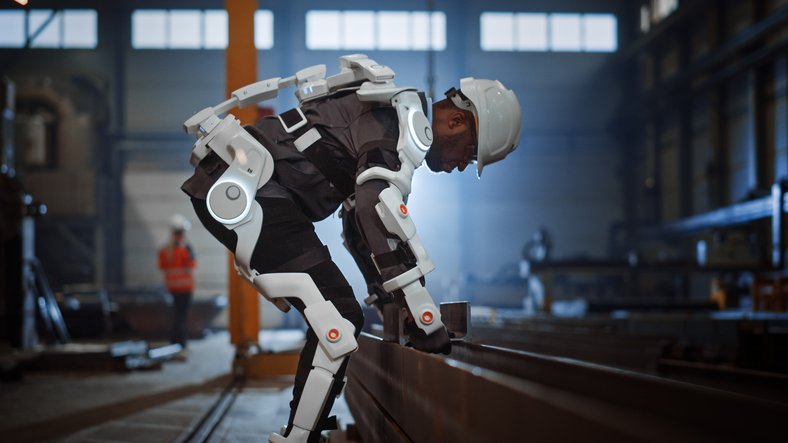
1. Manufacturing & Automotive
Cobots are revolutionizing production lines by taking on repetitive, ergonomically demanding tasks—like welding, bolting, parts assembly, and material handling—and have humans deal with complex judgments and monitoring. This collaboration enhances productivity, quality control, and flexibility.
2. Electronics & High-Precision Manufacturing
From soldering sensitive components to product testing, cobots and collaborative robots shine in settings that demand high precision and consistency. Businesses cite defect reduction and high increases in throughput.
3. Food & Beverage Processing
Cobots are increasingly engaged in packaging, portioning, palletizing, sorting, and quality checks—particularly where hygiene and uniform output are paramount. They assist in minimizing waste, providing safety, and ensuring production flow under tight sanitary conditions.
4. Logistics, Warehousing & Fulfillment
In fast-paced settings such as fulfillment centers, cobots aid in picking, sorting, packing, and inventory control. Not only does this speed up order fulfillment, but it also reduces workplace injury through the handling of heavy or repetitive physical labor.
5. Healthcare & Pharmaceuticals
Cobots are taking on critical roles in hospital logistics—such as delivery of medication and supplies—while surgical systems such as the da Vinci platform aid surgeons with greater accuracy. In laboratories, cobots automate repetitive tasks, enhancing sterilization, testing, and packaging processes take place by human robot interaction.
6. Agriculture & Food Service
From in-house farming to outdoor farming, cobots aid planting, harvesting, pollination, and sorting. In fast-food establishments and commercial kitchens, they can be used to repeat tasks such as frying, constructing, or delivering orders—aiding in increasing efficiency during labor shortages.
7. Construction & Heavy Industry
Cobots such as SAM (Semi-Automated Mason) are reducing physical stress for workers by automating processes like bricklaying and pouring concrete. In dangerous industries such as oil and gas, cobots assist in overcoming dangerous work conditions.
8. Law Enforcement & Hazardous Materials Handling
Cobots and robotics systems are used for remotely assisted bomb disposal and handling of hazardous materials—operations that are hazardous or precision-critical, allowing the human workforce to remain safe.
The Future of Human Robot Interaction
Key Aspects
1. Smarter Communication
Robots of the future will not just follow pre-set commands but understand natural language, tone of voice, and even facial expressions. This means instead of programming them, people will simply talk, gesture, or point, and the robot will know what to do. For example, a worker in a factory might say, “Pass me that tool,” and the robot will respond instantly.
2. Adaptive and Learning Systems
With advanced AI and machine learning, robots will learn from humans over time. Instead of repeating the same programmed action, they’ll observe patterns, anticipate needs, and improve at tasks. In homes, this could mean a robot noticing your daily routine—like preparing coffee at the time you usually wake up—without being explicitly instructed.
3. Healthcare and Caregiving
In hospitals, robots will support doctors with precision surgeries and assist nurses with tasks like lifting patients or delivering medicine. For elderly or disabled people, robots will provide companionship, remind them to take medications, or even monitor health in real time. This reduces human workload while ensuring safer, more personalized care.
4. Workplace Collaboration
Factories and offices will see robots as true teammates. Robots will take on dangerous, repetitive, or heavy tasks, while humans focus on problem-solving, creativity, and supervision. Imagine a construction site where a robot handles heavy lifting, while workers focus on design and safety. This partnership boosts both efficiency and safety.
5. Daily Life and Service Robots
Human–robot interaction won’t be limited to work. In homes, robots will cook, clean, and even tutor children. In shops, they’ll act as assistants, guiding customers, answering questions, and handling payments.
Human Robot Interaction
FAQ’S
What is the collaboration between human and robot?
Human–robot collaboration is when people and robots work together on shared tasks, combining human creativity and decision-making with robotic precision and strength.
It improves efficiency, safety, and flexibility across industries like manufacturing, healthcare, and logistics.
It focuses on safe interaction, teamwork, and adapting to each other’s strengths.
Cobots usually cost between $10,000 and $50,000 for the robot arm alone.
A full setup with tools, software, and integration can reach $150,000–$300,000.
IF YOU WANT TO KNOW ABOUT AI EXPLAINED